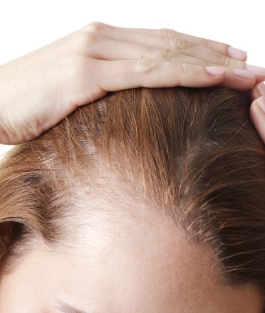
Hair LossDifferent Types of Hair Loss
Hair loss takes several forms, each with different causes. Androgenetic alopecia (male or female pattern hair loss) is the most common, and is generally related to genetic and hormonal factors. Alopecia areata is an autoimmune condition that causes patchy hair loss. Telogen effluvium causes diffuse thinning and is often related to stress, dietary factors or a major health event. Less common are the scarring (cicatricial) alopecias, which can cause permanent loss where hair follicles are replaced by scar tissue.
Identifying the specific type of hair loss is an important first step, because different types are managed differently. At The Skin Centre, the Dermatologists use diagnostic assessment to determine the type of hair loss, so that any treatment is based on an accurate diagnosis.
Who Does Hair Loss Affect?
Hair loss can affect anyone, though patterns vary. Male pattern hair loss is most common in men and can begin in early adulthood. Female pattern hair loss often becomes more noticeable with age, particularly after menopause. Conditions such as alopecia areata can affect both children and adults.
Hair loss can have a significant emotional impact, and we recognise it as a medical concern rather than only a cosmetic one. Our approach considers both the clinical and the personal side of hair loss, and we aim to provide considered, supportive care.
Our Approach
We take a medical approach to hair loss, grounded in diagnosing the underlying cause rather than treating the symptom alone. The Dermatologists who consult at The Skin Centre assess each patient individually and develop a plan based on the specific type of hair loss, the patient’s overall health, and their goals.
Depending on the diagnosis, management may involve a range of approaches. These can include PRP (platelet-rich plasma), which uses growth factors from the patient’s own blood and is one option that may be considered in the management of some types of hair loss, and laser-based treatments such as the 1927nm wavelength laser, which is used in treating the scalp. Not every treatment is appropriate for every type of hair loss, and what may help is determined during your consultation.
Ways We Treat Hair Loss
Because hair loss has different causes, there is no single treatment that suits everyone. Depending on your diagnosis, your dermatologist may discuss options including PRP, laser-based scalp treatments including the 1927nm wavelength laser, and other medical management appropriate to your condition.
The dermatologists work with each patient to determine which approaches, if any, are appropriate, based on clinical assessment and the type of hair loss involved. Some types of hair loss respond better to treatment than others, and your dermatologist will discuss what you might reasonably expect.
Book a consultation
Hair loss is a medical concern, and the right approach begins with an accurate diagnosis. To discuss your hair loss with one of the dermatologists who consult at The Skin Centre, book a consultation.
*Important information
All cosmetic and medical procedures carry risks and may not be suitable for everyone. Cosmetic and medical treatments at The Skin Centre begin with a consultation, where your clinician will assess your skin, discuss the options that may be appropriate for you, and explain the risks, recovery and likely number of treatments involved. Not every consultation results in treatment. Individual results vary from person to person.
The information on these pages is general and does not constitute medical advice. Suitability, risks and expected outcomes are discussed during your consultation.